Fleetguard
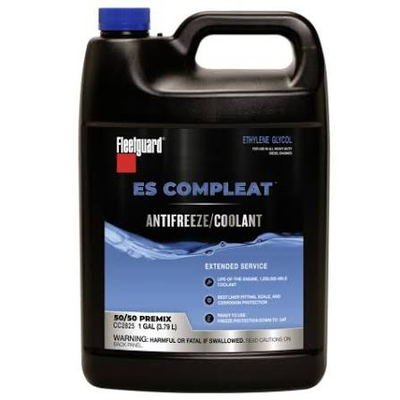
Fleetguard ES Compleat
Antifreeze and coolant
The heavy duty antifreeze and coolant, formulated for diesel engines with wet liners where the supplementary additive package is doing real work against liner pitting.
In this climate nobody buys coolant to stop the engine freezing. They buy it to stop the engine corroding, and to move heat out faster than water can on its own.
“Antifreeze” is a misleading word in Karachi. Freezing is not the problem here. What coolant actually does, every day, is carry heat out of the engine faster than plain water, raise the boiling point so it does not flash to steam at the hottest point in the head, and — the part that quietly decides how long the engine lasts — stop the inside of the cooling system corroding.
Plain water is the expensive option. It is free at the tap and it costs you a radiator, a water pump, and eventually a head gasket. Tap water brings dissolved minerals that scale up the hottest surfaces, and once a layer of scale is between the metal and the coolant, heat stops leaving. A topped-up-with-water system runs hotter every year.
IAT — conventional, inorganic. The traditional coolant, usually green. Its inhibitors work by coating every surface, which protects well but wears out quickly, so it needs changing far more often.
OAT — organic acid, often called extended life. Its inhibitors only act where corrosion actually starts, so they last much longer. Usually red, orange or pink, but see below.
HOAT — a hybrid of the two, common in European and some Japanese engines, often yellow or turquoise.
Colour is not a standard. This is the single most expensive misunderstanding in the trade. There is no rule that says red means OAT, and different manufacturers dye different chemistries the same colour. Two red coolants can be chemically incompatible. Never choose a coolant by matching the colour already in the radiator. Read the container, or ask us.
What happens when they are mixed is not dilution, it is reaction. The two inhibitor packages can drop out of solution and form a gel that blocks the radiator core and the heater matrix. Many a system has been destroyed by a careful top-up with the wrong bottle.
Most heavy diesel engines have replaceable wet cylinder liners, and those liners vibrate as each cylinder fires. The vibration forms and collapses tiny bubbles against the outside of the liner, and each collapse takes a microscopic bite out of the metal. Left alone it eats a hole clean through the liner wall into the cylinder.
The only thing standing between that and your engine is the supplementary coolant additive in a heavy duty coolant. An ordinary car coolant does not have it. If your engine has wet liners — most Cummins, Caterpillar and Perkins industrial engines do — it needs a coolant formulated for the job, and the additive level needs checking, not assuming.
How often, and to what level, is in your engine manual. We will not print a figure here, because it varies by engine and a wrong one is worse than none.
10 grades across Fleetguard, Caterpillar, Turbo, NASA, Osaka.
The same name as most of our filters, and formulated for heavy duty diesel engines with wet liners.
Fleetguard
Antifreeze and coolant
The heavy duty antifreeze and coolant, formulated for diesel engines with wet liners where the supplementary additive package is doing real work against liner pitting.
Fleetguard
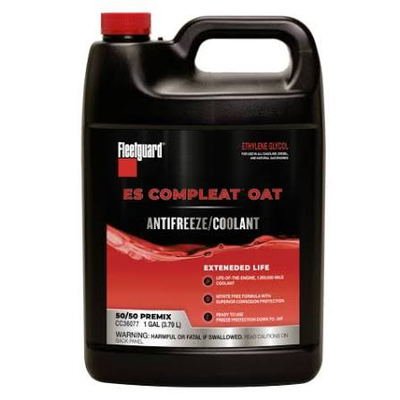
Extended life antifreeze and coolant
The organic acid version, extended life. Its inhibitors act only where corrosion starts rather than coating every surface, which is why it lasts far longer between changes. Not to be mixed with the conventional coolant above.
Caterpillar specify their own coolants for their engines, and on a machine still under warranty that specification is usually not optional.
Caterpillar
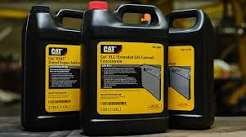
Engine coolant
Caterpillar specify their own coolants, and on a machine still under warranty that specification is usually not optional. Bring your machine model and we will confirm which one it asks for.
Caterpillar
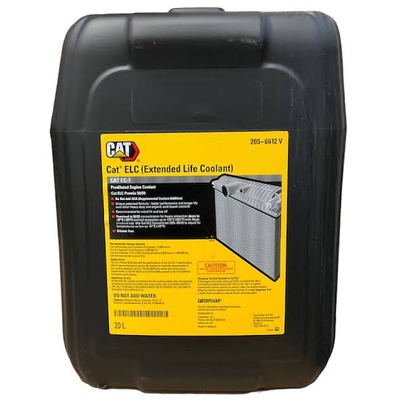
Extended life coolant
Caterpillar Extended Life Coolant, supplied in bulk for plant and generator fleets. Extended life means an organic acid inhibitor package, so it must not be topped up with a conventional coolant. If your machine is on the conventional Caterpillar coolant, stay on it or have the system flushed properly first.
Ready-to-use coolant and antifreeze in the lighter commercial and automotive range.
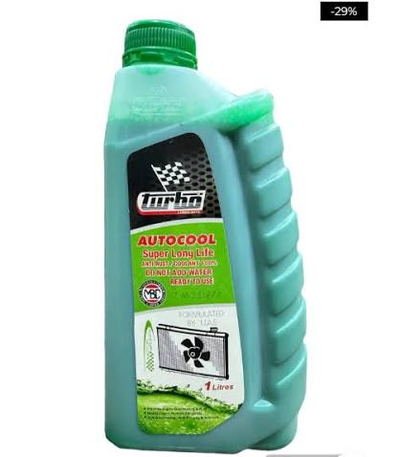
Turbo
Ready to use coolant
Super long life, supplied ready to use. The label says do not add water, and it means it: diluting a ready-to-use coolant weakens the inhibitors that are protecting the system.
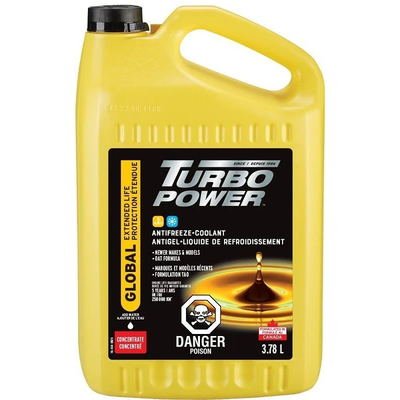
Turbo
Antifreeze and coolant
The antifreeze and coolant in the Turbo range, supplied in 3.78 litre containers.
The one most often asked for over the counter for cars and light commercials, and sold here in more than one chemistry.
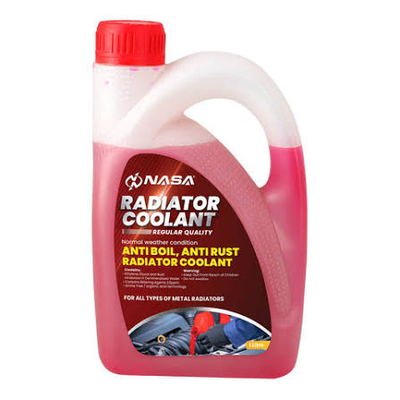
NASA
Ready to use radiator coolant
Anti-boil and anti-rust, ready to use. The one most often asked for over the counter for cars and light commercials.
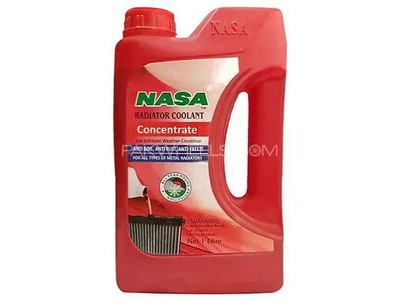
NASA
Concentrate
The concentrate, mixed with clean water at the ratio on the container rather than by eye. Mixing it strong does not make it work better: past about seventy per cent glycol it carries heat worse than a correct mix.
Long life radiator coolant, sold mainly into the automotive and light commercial market.
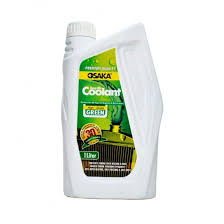
Osaka
Long life radiator coolant
Long life radiator coolant for the automotive and light commercial market.
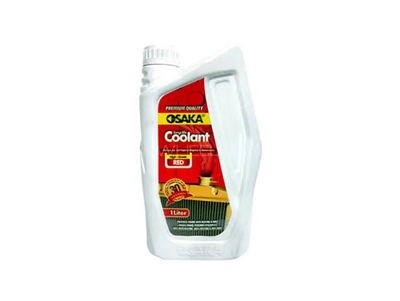
Osaka
Antifreeze and coolant
Sold alongside the green coolant above. Check which of the two your system already has before topping up, and never mix chemistries.
The quickest way to get the right thing is to tell us what it is going into: the make, the model, and what it does all day. We will tell you what it takes, confirm what is on the shelf, and quote it. If your engine manual names a specification, bring that and we will match it exactly.